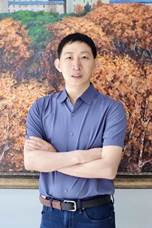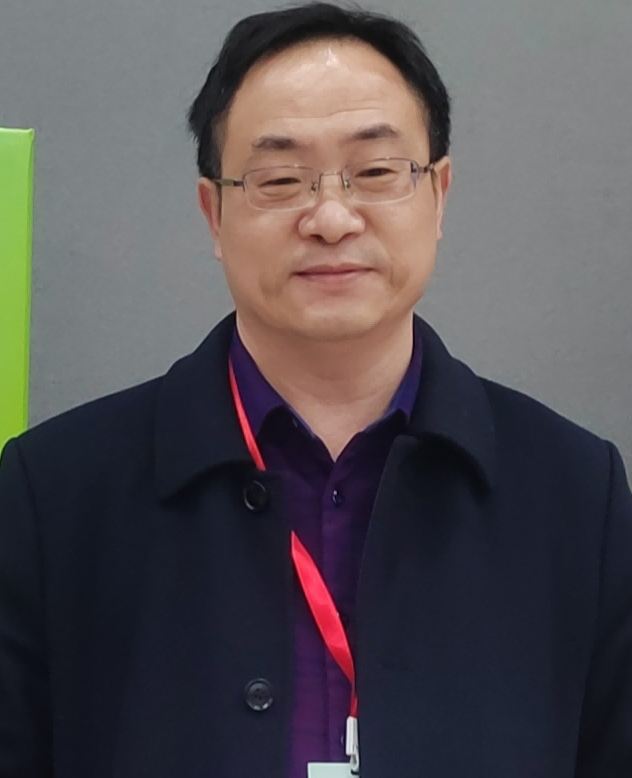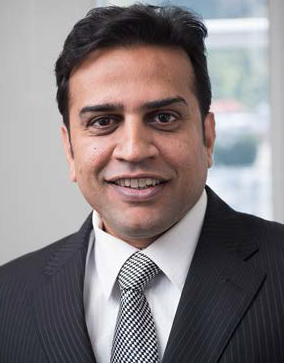

Keynote
Speakers
Keynote Speaker I

Prof. Schahram Dustdar
IEEE Fellow, Asia-Pacific Artificial Intelligence Association (AAIA)
Fellow
ACM Distinguished Scientist, ACM Distinguished Speaker
Member of the Academia Europaea
Profile: Schahram Dustdar is Full Professor of Computer
Science
heading the Research Division of Distributed Systems at the TU Wien, Austria. He holds
several honorary positions: Francqui Chair Professor at University of Namur, Belgium
(2021-2022), University of California (USC) Los Angeles; Monash University in Melbourne,
Shanghai University, Macquarie University in Sydney, University Pompeu Fabra, Barcelona,
Spain. From Dec 2016 until Jan 2017 he was a Visiting Professor at the University of
Sevilla, Spain and from January until June 2017 he was a Visiting Professor at UC Berkeley,
USA.
From 1999 - 2007 he worked as the co-founder and chief scientist of Caramba Labs Software AG
in Vienna (acquired by Engineering NetWorld AG), a venture capital co-funded software
company focused on software for collaborative processes in teams. Caramba Labs was nominated
for several (international and national) awards: World Technology Award in the category of
Software (2001); Top-Startup companies in Austria (Cap Gemini Ernst & Young) (2002); MERCUR
Innovation award of the Austrian Chamber of Commerce (2002).
He was founding co-Editor-in-Chief of ACM Transactions on Internet of Things (ACM TIoT) as
well as Editor-in-Chief of Computing (Springer). He is an Associate Editor of IEEE
Transactions on Services Computing, IEEE Transactions on Cloud Computing, ACM Computing
Surveys, ACM Transactions on the Web, and ACM Transactions on Internet Technology, as well
as on the editorial board of IEEE Transactions on Big Data, IEEE Internet Computing, IEEE
Computer and of many more. Dustdar is recipient of multiple awards: TCI Distinguished
Service Award (2021), IEEE TCSVC Outstanding Leadership Award (2018), IEEE TCSC Award for
Excellence in Scalable Computing (2019), ACM Distinguished Scientist (2009), ACM
Distinguished Speaker (2021), IBM Faculty Award (2012). He is an elected member of the
Academia Europaea: The Academy of Europe, where he is chairman of the Informatics Section,
as well as an IEEE Fellow (2016), an Asia-Pacific Artificial Intelligence Association (AAIA)
President (2021-2023) and Fellow (2021). He is an EAI Fellow (2021) and an I2CICC Fellow
(2021). He is a Member of the 2022 IEEE Computer Society Fellow Evaluating Committee (2022)
and Chair of the Advisory Board of the National Edge AI Hub (led by Newcastle University,
UK).
Keynote Speaker II

Prof. Ilan Noy
Victoria University of Wellington, New Zealand
Research Area: Economic aspects of hazards, disasters, and climate change
Profile: Professor Ilan Noy is the Te Āwhionukurangi Chair in the Economics of
Disasters and Climate Change, established in 2013. The focus of the Chair is on the
research and application of economics to the management of natural hazards,
disasters, and climate change.
Speech Title: Using Big Data to Calculate the Costs of Climate Change
Abstract: Climate change is already increasing the frequency or severity of some
extreme weather events, such as with rainfall during tropical cyclones. Extreme
Weather Event Attribution, a branch of climate science, quantifies the extent to
which anthropogenic climate change has already modified the frequencies and
intensities of specific extreme weather events that have already occurred. We
combine this information with detailed large sets of socio-economic data to provide
useful insights about the economic costs of extreme weather events that were caused
by climate change. We present two examples of such an approach. In the first, we
examine Hurricane Harvey that hit Texas in 2017 and describe the micro-scale
distributional implications of current climate change-induced impacts and assistance
in the Harvey case. In the second example, using a meta-analysis of attribution
studies, we aggregate the global current costs of climate change and show these are
typically underestimated. We estimate that climate change-attributed extreme weather
events have cost the world about US$140 billion a year during the past two decades.
Keynote Speaker III

A. Prof. Vipul Jain
Victoria University of Wellington, New Zealand
Research Area: Supply-chain management, Sustainable supply chain management,
Circular Economy, Supply Chain Management 4.0, Humanitarian Logistics, Service
operations and healthcare supply chains, Industry 4.0
Profile: Dr Vipul Jain is Associate Professor in Supply Chain and Logistics
Management at Wellington School of Business and Government, Victoria University of
Wellington, New Zealand. He was the Director of Doctoral Programme and Research
Director for School of Management. Vipul is highly cited in his area of research on
Operations and Supply Chain Management and has more than 130 archival publications
to his credit in high impact factor journals, as well as conference papers, edited
books and books chapters. Vipul is serving as an Editor-in-Chief, Associate Editor,
Area Editor and editorial board member for many prestigious Operations and
Decision-Making journals. Vipul has been actively involved in conducting Management
Development Programmes/Training Programmes for Senior Managers and Executives of
Public and Private Organizations in Asia on various issues and challenges
encountered in Operations, Logistics, and Supply Chain Management.
Speech Title: “SMARTNESS” THAT REALLY MATTERS: Reaching new levels of Customer
Satisfaction with SMART Supply Chain Management
Abstract: Recent dynamic events around the world have provided frequent reminders
that we live in an unpredictable and changing world. It has become imperative for
channel entities to incorporate risk management tools in the management of their
supply chains. Further, there is no surety that supply chain players will conform to
environmental norms and compliance standards, even as more and more of these are
enforced into practice, the organizations most likely to get stranded are the ones
looking simply at cutting supply chain costs. Smart operations, digital supply
chains and sustainability can be considered from different points of view which
imply an integration of industrial engineering, business informatics, management,
and operations research competencies. This talk will discuss about the new emerging
research methodologies which are geared towards providing and developing effective
solutions for performance/risk analysis of integrated supply chain networks, making
it smarter. This talk will also address emerging generic modeling and optimizing
approaches which integrates various supply chain functions; capture all
process-related information including activities, resources and organizational units
as well as their interdependencies to support complex dynamic and distributed supply
chain smart operations. Considering the dynamic characteristics of supply chain
networks, the discussed research approaches can be utilized as a modeling and
optimization tool to study the impact of different smart supply chain strategies and
policies and will help the managers to build trust among supply chain partners.
Briefly, this talk addresses the summary of work done in supply chain literature,
provides key insights and future research directions while addressing several
emerging research issues in complex and dynamic smart supply chain environments,
thus providing strong implications for academia and supply chain practitioners.
Keynote Speaker IV
A. Prof.Dalin Zhang
The Chapter Chair of Computer Society, IEEE Denmark
Aalborg University, Denmark
Research Area:Data And Learning-based Intelligence with Novel application
Profile: I am currently an Associate Professor in the Department of Computer
Science, Aalborg University, Denmark. I am also a faculty member in the Center for
Data-Intensive Systems (Daisy) with Prof. Christian S. Jensen. From 2020-2023, I was
a tenure-track Assistant Professor at Aalborg University, Denmark. Before joining
Aalborg University in Aug 2020, I was pursuing my PhD degree at the School of
Computer Science and Engineering, the University of New South Wales Sydney,
Australia from Apr 2017 to Apr 2020. I was an Australian Government Research
Training Program (RTP) scholarship holder between 2017-2020 (awarded in 2016). My
research interest lies in various aspects of data mining for time series and its
applications in health management. I have published more than 40 peer-reviewed
publications, including SIGMOD, PVLDB, ICDE, AAAI, IJCAI, IMWUT, TMC, TKDE, TCYB
etc. I have been serving as the Chapter Chair of Computer Society, IEEE Denmark from
2020 to 2022. I also served as a PC member for top conferences like KDD, AAAI,
IJCAI, SDM, CIKM etc.
Speech Title: Deep learning for Correlated Time Series Forecasting
Abstract: Correlated Time Series (CTS) forecasting poses intricate challenges across
various domains, including finance, climate science, and healthcare. Traditional
forecasting methods often struggle to capture the subtle dependencies and intricate
patterns within CTS data, rendering accurate predictions elusive. In recent years,
Deep Learning has emerged as a potent tool for addressing this complexity. This
seminar hones in on two critical facets of CTS forecasting: Automated Deep Learning
and Lightweight Deep Learning. Automated Deep Learning streamlines the design and
configuration of deep learning models with minimal manual intervention. This
encompasses automated tasks such as architecture search and hyperparameter tuning,
aimed at enhancing the efficiency and accessibility of model development for
practitioners. Conversely, Lightweight Deep Learning concentrates on crafting
resource-efficient deep learning models tailored specifically for CTS forecasting.
Our exploration delves into the creation of compact neural architectures, conducive
to edge computing applications. These lightweight models shine in scenarios with
limited computational resources, ensuring the generation of accurate forecasts, even
in resource-constrained environments.
Electronic Submission System (PDF format)
Format: Full paper (Template Download)